
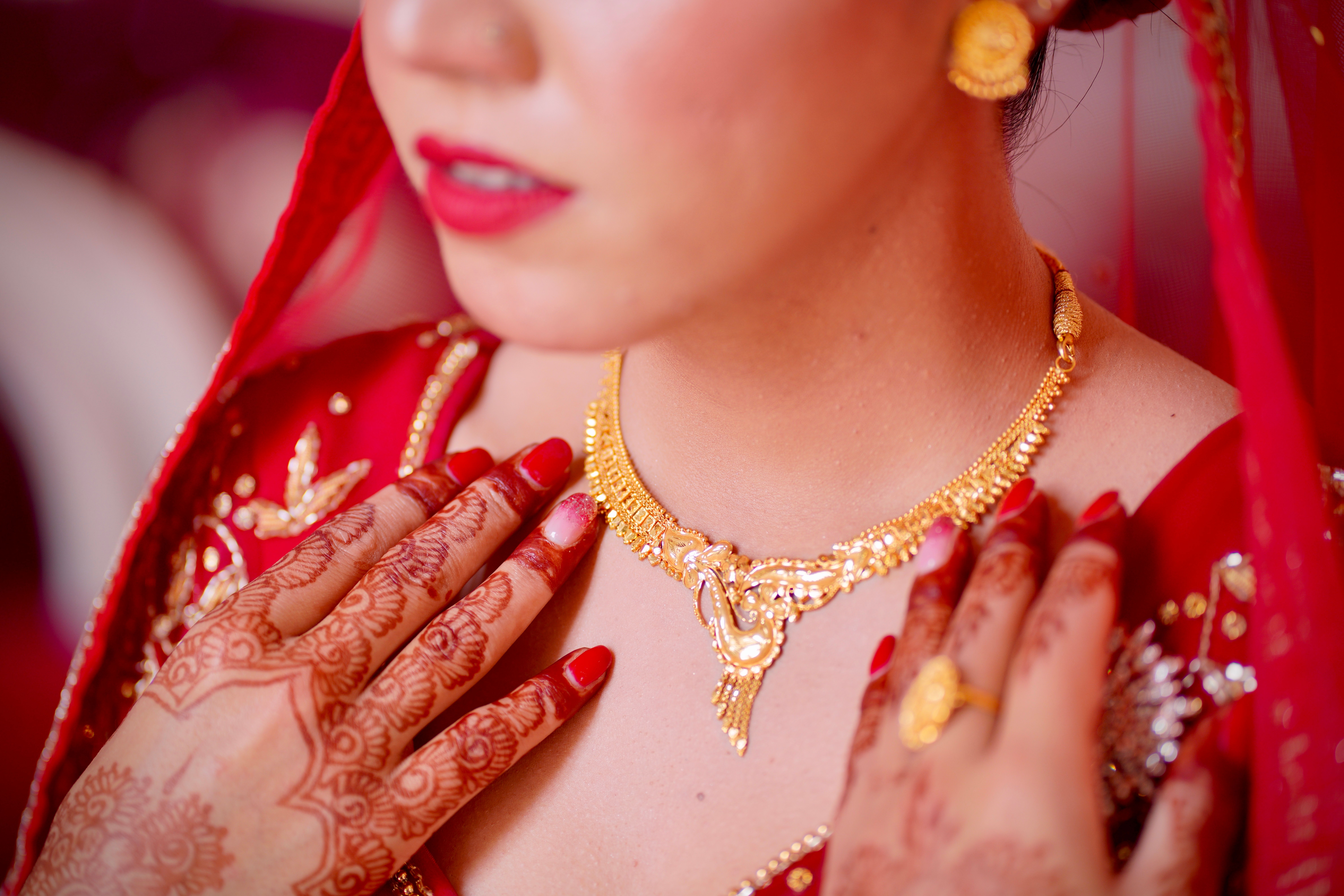
How to Choose Gold Jewellery Based on Skin Tone, Purity and Occasion
Buying gold jewellery becomes far easier once you know three things. First, decide how pure you want the gold to be. Second, find which gold tone suits your skin. Third, know what the piece is actually for. Get those three right, and almost any design will look intentional rather than random.
Gold Purity: What 9 Carat, 14 Carat and 18 Carat Actually Mean
Carats measure gold purity, and the carat count changes how a piece looks, wears and costs. It’s not just a marker of how “real” the gold is.
- 9 carat gold mixes 37.5% pure gold with other metals such as copper, silver or palladium. It’s the hardest and most scratch-resistant of the three. That makes it a practical choice for rings and bracelets you wear daily. Its colour is paler, and it’s the most affordable option.
- 14 carat gold contains 58.5% pure gold. It sits in the middle. It carries richer colour than 9 carat gold, and it wears better than 18 carat gold. Many people choose it for engagement rings and jewellery they wear often.
- 18 carat gold contains 75% pure gold. It carries the deepest, warmest colour and holds the highest resale value. It’s also softer and scratches more easily, so it suits pieces you don’t knock around daily — earrings, pendants, occasion rings.
Here’s the rule of thumb: the more often you’ll wear or knock a piece against things, the lower the carat should be. The more a piece is about colour and status — an engagement ring, a statement pendant — the higher the carat can justify its cost.
Matching Gold Tone to Skin Undertone
Gold tone (yellow, white, or rose) interacts with skin undertone. Mismatching the two is the most common reason a piece looks “off,” even when the design itself is good.
- Warm undertones — skin that tans easily, with green-looking veins — suit yellow gold and rose gold best. These tones sit close to the skin’s own warmth instead of fighting it.
- Cool undertones — skin that burns easily, with blue or purple-looking veins — suit white gold or platinum-finished pieces. Yellow gold can look slightly yellow-grey against cool, pink-based skin.
- Neutral undertones can wear any of the three. That’s why many people pick rose gold as a safe “in-between” gift when they don’t know someone’s undertone.
Try a quick test: hold a yellow gold piece and a white gold piece against the inner wrist in natural daylight. Whichever makes the skin look brighter and more even, rather than washed out, is the better tone.
Choosing Gold Jewellery by Occasion
Engagement and wedding rings get worn daily for decades. That’s why 14 carat gold is the common middle ground — it holds up to everyday wear and still carries enough colour to look substantial. Choose 18 carat gold when colour depth matters more than day-to-day resilience.
Gifts for someone whose taste you don’t know do best in a mid-purity, classic design. Pick a plain band, stud earrings, or a simple pendant rather than a heavily set or trend-led piece.
Everyday wear pieces — a bracelet for work, a chain under clothing — hold up best in 9 or 14 carat gold. Higher-carat gold scratches faster.
Statement or occasion pieces — a pendant for a formal event, a cocktail ring — are where 18 carat gold earns its higher cost. People see the piece more than they use it.
Reading a Hallmark Before You Buy
UK law requires a hallmark on gold jewellery over a certain weight. An assay office stamps this hallmark onto the piece, showing the carat or fineness (375 for 9ct, 585 for 14ct, 750 for 18ct), the maker’s mark, and the assay office’s own mark. If a piece carries no hallmark and sits above the exemption weight, ask questions before you buy, not after.
A Simple Way to Decide
Choosing between two pieces and feeling unsure? Pick the lower carat for anything you’ll wear daily. Match the gold tone to the undertone test above. Treat the hallmark as confirmation, not decoration. Everything else — design, stone, chain style — comes down to personal taste. That’s the part worth enjoying, not second-guessing.
If you’d like to see the purity and tone guidance above in practice, browse our full range of gold jewellery, including our collection of modern gold jewellery designs across 9, 14 and 18 carat pieces.
